

Selected Work

Stealth PEF Startup
Turnkey high-voltage (>3 kV), high-current (>40 A) biphasic Pulse Electric Field (PEF) generator designed for clinical and research applications requiring precision, reliability, and full control. The system integrates embedded MCU and FPGA-based real-time control for highly accurate pulse shaping and delivery, ensuring consistent therapeutic outcomes. An intuitive Android tablet interface enables complete configuration and control of all pulse parameters, including dynamic waveform generation.
The platform has undergone full verification and validation (V&V) to support regulatory submissions and is currently deployed in First-In-Human clinical trials. All units are manufactured under ISO 13485-certified quality processes, ensuring compliance with stringent medical device standards and scalability for future clinical and commercial deployment.

Plaz4
Turnkey High-Voltage Design for a Non-Thermal Plasma Generator with Applications in Wound Disinfection and Healing. Electrical engineers at SN&N designed and laid out custom circuit boards for high-voltage, high-current output at high repetition rates. A custom Tesla coil was designed in accordance with 60601 safety standards to deliver a pulsed harmonic drive of more than 20 kV, generating cool plasma. Firmware engineers worked closely with our electrical engineers to design a real-time embedded controller for synchronized high-voltage and gas-delivery subsystems. A graphical and intuitive user interface was developed on an Android tablet for top-level control of the instrument.

Stanford - Ultrastable Laser
& NICE-OHMS Optical Clock
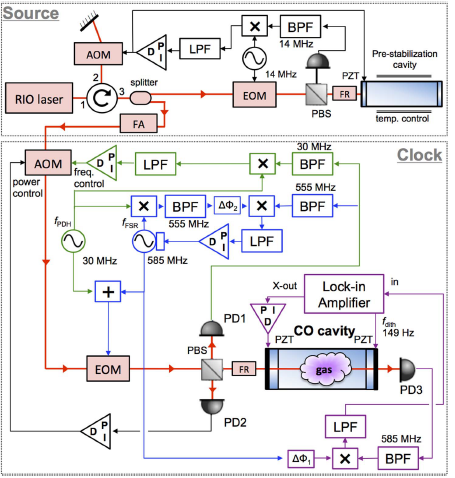
Engineers at SN&N Electronics developed a complete, turnkey laser stabilization system for optical clock research at Stanford University. SN&N designed and integrated the full optical train alongside all-analog, ultra-low-noise stabilization electronics, locking a 1.56 µm laser to a carbon monoxide (¹²C¹⁶O) overtone transition using Noise-Immune Cavity-Enhanced Optical Heterodyne Molecular Spectroscopy (NICE-OHMS) coupled to a high-finesse (>200,000) ultrastable Fabry-Pérot cavity. The scope encompassed optical layout and assembly, custom low-noise current drivers, RF modulation controls, sub-millikelvin thermal management, and high-bandwidth, low-noise analog servo loops for phase/frequency locking and drift suppression.
Reference: Molecular frequency reference at 1.56 μm using a ¹²C¹⁶O overtone transition with the noise-immune cavity-enhanced optical heterodyne molecular spectroscopy method. S. Saraf, P. Berceau, A. Stochino, R. Byer, and J. Lipa
NASA-LISA
SN&N optical, electrical and software engineers developed super-quiet, ultrastable electronics to precisely pump and temperature control the solid-state laser crystal for the Laser Interferometer Space Antenna (LISA) mission. The LISA mission is a spaced-based gravitational wave observatory to directly detect gravity waves from enormously powerful astrophysical events like super massive black hole mergers and extreme mass ratio inspirals, among other cosmological possibilities. LISA is a collaboration between NASA and the European Space Agency (ESA) and a follow-up to the famous ground-based Laser Interferometer Gravitational Wave Observatory (LIGO) that was the first to detect gravity waves from a pair of colliding black holes in 2015. The laser frequency stability and noise requirements are among the most exacting for a modern physics experiment. SN&N designed, fabricated and delivered a set of all-analog, low-noise, low-power drivers for laser diode current control and modulation, thermal controllers for precise temperature control of the solid-state laser crystal, servos for laser intensity noise suppression, high voltage drive for frequency tuning the crystal, laser diode high current and modulation drivers for a fiber-based laser amplifier, fiber temperature control etc. The next step for SN&N Electronics is a space-qualified design of the laser drive electronics.

From: NASA
Farapulse
SN&N engineers designed and developed an integrated pacing and EGM sensing system for synchronized delivery of Pulsed Electric Field (PEF) therapy for treating atrial fibrillation. This revolutionary new treatment developed by Farapulse, Inc. involves precise and momentary creation of a therapeutic high voltage electric field to treat uniquely-sensitive myocardium. Collateral, non-target tissues are spared due to their higher threshold to PEF. Pacing and EGM sensing in the SN&N design is immune to high voltage coupling in the patient's heart. Turnkey product development included system architecture design, prototype development for animal studies, electronic design, PCB layout, fabrication, board assembly, firmware development, top level software and GUI design.

From: Boston Scientific Corporation
Integrated
Nano-Technologies
Turnkey product development of a portable molecular diagnostics instrument for pathogen detection. SN&N engineering developed specifications, system architecture design, polymerase chain reaction (PCR) thermal cycler, custom motor drivers for fluidics and sample preparation, ultrasonic horn driver design, prototyping, electronic design, PCB layout, fabrication, board assembly, firmware development, top level software, GUI design, customized Android tablet application and cloud connection of the fully automated DNA analysis instrument. The Palladium™ instrument automates the entire genetic identification process in a compact size and confirms the presence of a targeted pathogen.
Miramar Labs
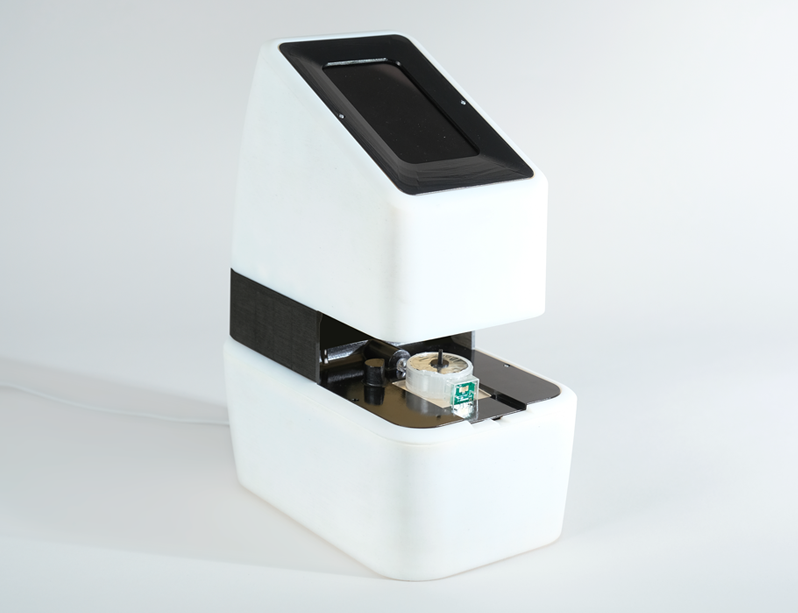
Designed mixed-signal integrated electronics, FPGA code, microwave delivery and power electronics for three generations of high-power microwave generators. Precision digital servos in FPGAs control microwave power delivery to 0.2dbm and thermoelectric-based heat exchangers ensure safe and efficient delivery of microwave energy to human tissue. Patented design is used for sweat-gland reduction.

Cepheid
Developed system architecture, designed analog electronics, developed digital servo algorithms and designed patented cell-lysing ultrasonic transducer drive circuitry for the original GeneXpert®, a fully automated DNA analysis instrument using polymerase chain reaction (PCR). The system is used by among others, the US postal service for screening mail for anthrax spores and other biothreats.
On March 30, 2020 Cepheid received the FDA's first emergency use authorization for a point-of-care COVID-19 diagnostic for the Cepheid Xpert Xpress SARS-CoV-2 test. The test can provide rapid detection of the SARS-CoV-2 coronavirus in approximately 45 minutes with less than a minute of hands on time to prepare the sample.

EBR Systems
Designed, developed, fabricated and released to manufacturing a dual-band wireless, low-power, super-speed USB-based FDA-submitted programmer for implantable cardiac pacemaker devices. Programmer was controlled using a tablet and SN&N software engineering implemented boot-loader functionality and features in firmware for enhanced security against code tampering.
